نجکاری کے عمل میں صارفین کے مفاد کو ترجیح دی جائے،وزیراعظم کی ہدایت
 ADMIN
ADMIN The long-awaited Free Trade Agreement (FTA) between India and the United Kingdom has officially come into effect, marking a significant milestone in the economic relationship between the world’s fifth and sixth-largest economies. After years of negotiations, both countries have finalized a trade pact that promises to reshape commerce by reducing tariffs on thousands of products, encouraging investment, and creating fresh opportunities for businesses on both sides.
For consumers, the agreement could eventually mean lower prices and greater product variety. For exporters and manufacturers, it opens access to larger markets while making trade more competitive. Although experts believe the agreement’s full impact will take time to emerge, many industries are already preparing for a new era of business.
A Landmark Agreement
The India-UK Free Trade Agreement eliminates or reduces tariffs on the majority of goods traded between the two nations. Around 99% of Indian exports to the UK will now enjoy reduced or zero tariffs, while nearly 90% of British exports to India will also receive tariff concessions over time.
Both governments have described the agreement as one of the most important trade deals in recent years. British officials believe it will provide a long-term boost to the UK’s economy, while India expects stronger export growth, increased manufacturing activity, and new employment opportunities across several sectors.
Trade experts say the agreement strengthens economic ties at a time when global supply chains are changing and businesses are actively looking to diversify manufacturing and sourcing destinations.

Indian Textile Industry Expected to Benefit
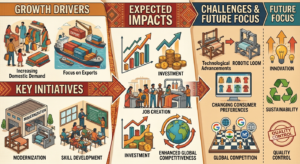
Among the biggest beneficiaries of the agreement is India’s textile and home furnishing industry.
Indian manufacturers have supplied British retailers for decades, but many products previously faced import duties that reduced their competitiveness compared to countries enjoying preferential market access.
Companies like Welspun Living, one of India’s leading home textile manufacturers, already supply towels, bed linen, and other household products to major British retailers including John Lewis and Tesco.
With tariffs now significantly reduced, Indian manufacturers expect stronger demand from UK buyers. Industry executives say British retailers have already started discussing long-term sourcing plans, reflecting growing confidence in India’s manufacturing capabilities.
The agreement is expected to improve India’s competitiveness against countries such as Bangladesh and Pakistan, whose exports previously enjoyed duty-free access under separate UK trade arrangements.
Industry leaders believe India now has a realistic opportunity to expand its market share in Britain’s home textile sector over the coming years.
Ready-Made Garments Could See Major Growth
India’s ready-made garment industry is also expected to gain substantially.
The UK imports billions of dollars worth of clothing every year, with China currently holding the largest share of the market. However, rising production costs in China and changing global sourcing strategies have encouraged many international brands to diversify suppliers.
India stands to benefit from this shift.
Market research suggests India’s share of UK garment imports could increase significantly during the next few years as British brands seek reliable manufacturing partners capable of producing high-quality apparel at competitive prices.
Lower import duties make Indian garments more attractive for British retailers, helping domestic manufacturers secure larger export orders and improve profit margins.
Since the textile and apparel industries employ millions of workers across India, higher exports could also contribute to job creation in manufacturing hubs.
Scotch Whisky Becomes More Affordable
One of the most widely discussed aspects of the agreement is the reduction in tariffs on Scotch whisky.
Previously, imported Scotch faced customs duties of approximately 150% in India, making premium British whisky considerably more expensive than many domestic alternatives.
Under the new agreement, the tariff has immediately been reduced to 75%, with a gradual reduction to 40% over the next decade.
Importers believe this represents one of the most significant changes introduced by the agreement.
While prices may not fall overnight because of transportation costs, state taxes, distributor margins, and retailer pricing, consumers can eventually expect greater availability of premium Scotch brands at relatively lower prices.
Importers are currently working closely with British suppliers to ensure all documentation, certificates of origin, and customs procedures comply with the new trade rules before shipments begin arriving under the revised tariff structure.

More Choices for Consumers
Consumers in both countries could gradually enjoy wider product choices.
British shoppers may gain easier access to Indian products including clothing, footwear, carpets, seafood, home textiles, spices, fruits, and handicrafts.
Meanwhile, Indian consumers could benefit from increased availability of British products such as premium food items, beverages, cosmetics, automobiles, and luxury consumer goods.
Greater competition often encourages businesses to improve quality while keeping prices competitive, which can ultimately benefit customers.
Businesses Must Adapt Quickly
Although the agreement creates significant opportunities, businesses cannot simply rely on lower tariffs alone.
Exporters must understand the agreement’s rules, particularly regarding certificates of origin and documentation requirements needed to qualify for preferential tariff treatment.
Trade experts have frequently pointed out that many small and medium-sized Indian exporters have historically failed to utilize existing free trade agreements because they were unfamiliar with complex compliance procedures.
Without proper awareness and training, companies risk missing out on the benefits offered by the new agreement.
Industry associations and government agencies are therefore expected to play an important role in educating exporters about documentation, customs compliance, and revised trade regulations.
Challenges Still Remain
Despite widespread optimism, analysts caution that the agreement is not a complete solution to every trade challenge.
Certain products remain outside the scope of the agreement, while some industries continue to face restrictions designed to protect domestic markets.
For example, steel exports may still encounter quotas and protective measures in the UK.
Another emerging concern is the UK’s proposed Carbon Border Adjustment Mechanism (CBAM), which could impose additional carbon-related costs on certain imported products.
Experts warn that even if customs duties fall to zero, carbon-related charges could increase the overall cost of exports for industries covered by the new environmental regulations.
These factors may reduce some of the expected gains from tariff reductions.
The Real Test Lies Ahead
Economists believe the true success of the agreement will become visible over the next one to three years.
The key indicators will include higher export volumes, increased business investment, stronger manufacturing growth, and improved profitability for exporters.
If Indian companies receive more orders from British buyers and successfully expand their market presence, the agreement could become one of India’s most successful trade partnerships in recent years.
Similarly, British businesses will be watching closely to see whether reduced tariffs help expand sales of their products in India’s rapidly growing consumer market.
A Positive Step for Bilateral Trade
Overall, the India-UK Free Trade Agreement represents a major step toward strengthening economic cooperation between two important global economies.
While challenges remain and the benefits may not be immediate, the agreement provides a solid framework for expanding trade, encouraging investment, and creating long-term business opportunities.
For Indian manufacturers, it offers improved access to one of Europe’s largest consumer markets. For British companies, it opens greater opportunities in one of the world’s fastest-growing economies.
Most importantly, consumers in both countries stand to gain through increased competition, better product availability, improved quality, and potentially more affordable prices over time.
If businesses, governments, and industry organizations work together to fully utilize the agreement’s provisions, the India-UK trade deal could become a defining chapter in the economic partnership between the two nations, delivering benefits that extend well beyond tariffs and trade statistics.